
Research
Wildlife Athens focuses on using technology and citizen science to monitor our urban population in Athens-Clarke County with the goal to maintain urban wildlife biodiversity into the future. To accomplish this, we work with our other related projects (e.g., Wildlife Atlanta) and local partners to address wildlife conservation issues such as human-wildlife conflicts and answer pressing urban wildlife questions through local and multi-city research efforts as detailed below. We then use this information to provide science-based recommendations to our partners here in Athens such as the ACC Sustainability Department as they strive to make decisions on wildlife management and urban planning.
When the wild things are:
Defining mammalian diel activity and plasticity

Devarajan et al. 2025
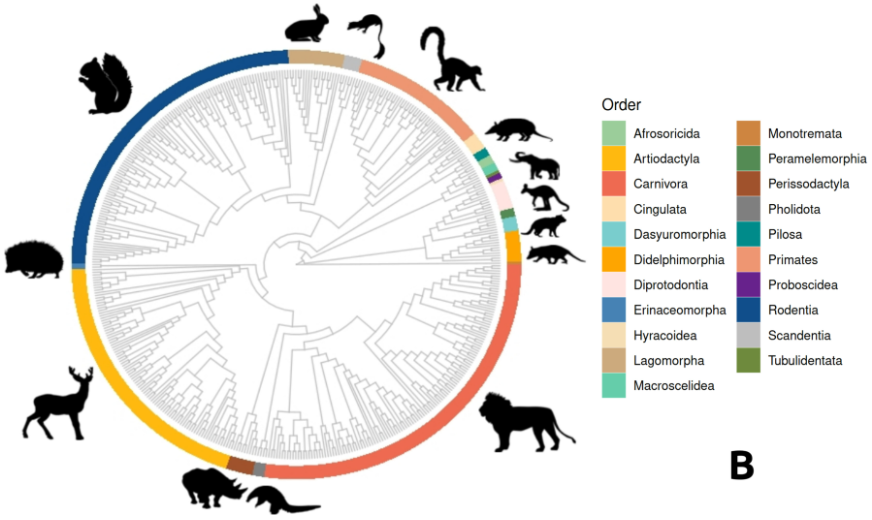
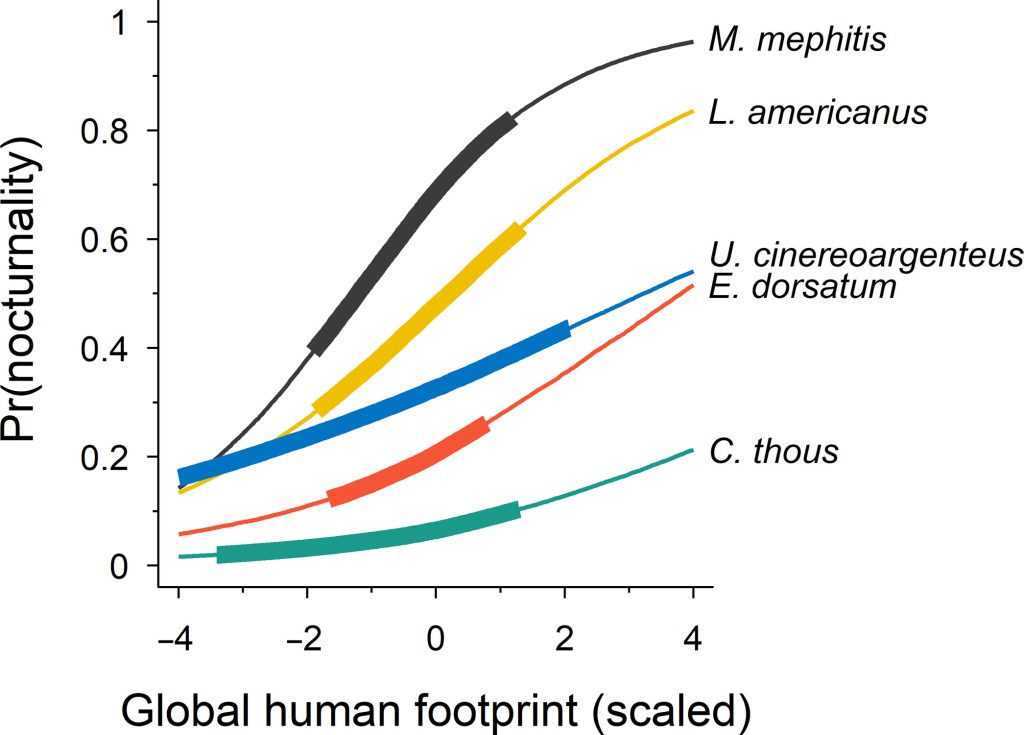
A global study utilizing Athens as one of its cities which aimed to understand daily activity patterns (diurnal, nocturnal, etc) for over 400 mammal species. We found that these patterns were variable when exposed to human influences, and many species shifted to nocturnal periods in the presence of humans. Additionally, we found that, in general, smaller mammals and mammals that lived in warmer environments were more likely to be nocturnal than larger mammals or mammals that lived in colder environments.
Gentrification drives patterns of alpha and beta diversity in cities
Fidino et al. 2024
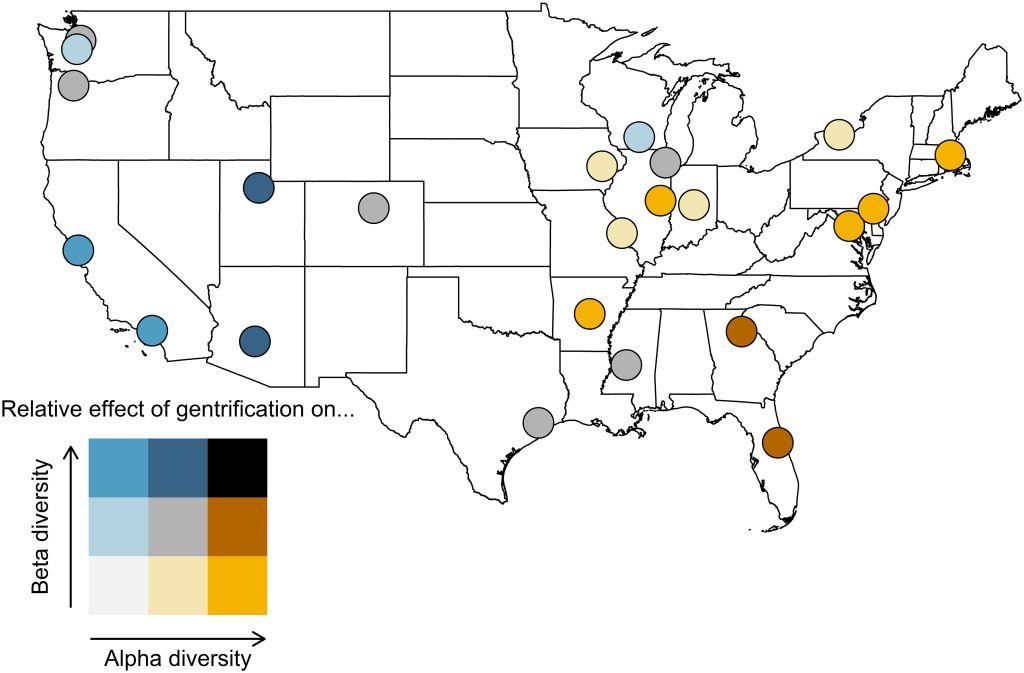
Gentrification is the process by which white individuals who are typically more educated and have higher income displace those with less resources, which often leads to more green spaces due to the increased funding. This study analyzed 23 cities including Athens and found that gentrified parts of cities had higher mammal biodiversity and overall higher mammal populations, demonstrating that gentrification also impacts wildlife. It also provides further evidence that certain aspects of nature are inaccessible to marginalized people in cities.
Mammal responses to global changes in human activity vary by trophic group and landscape
Burton et al. 2024
A study that observed how mammals’ behavior changed during the COVID-19 pandemic as human activity drastically changed. When humans became more active after lockdown ended, the subsequent changes in mammal activity varied widely. In areas less developed by people, mammals would avoid places where people were most likely to be. However, in more developed areas, mammals tended to instead become more nocturnal to avoid times when people are most active. These changes varied depending on whether a mammal was an herbivore, carnivore, or omnivore, with carnivores being most sensitive to changes in human activity. This study involved cities around the world, including Athens.

Burton et al. 2024
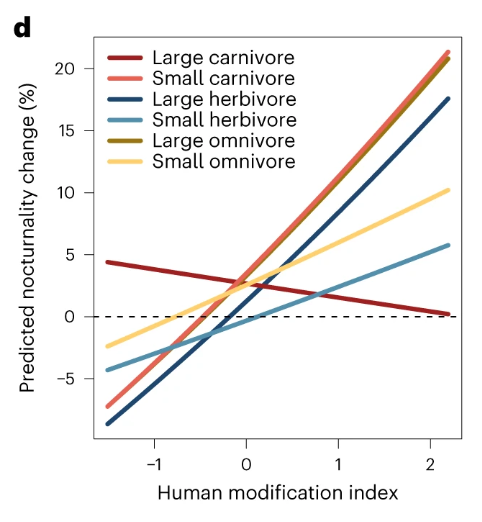
A study that observed how mammals’ behavior changed during the COVID-19 pandemic as human activity drastically changed. When humans became more active after lockdown ended, the subsequent changes in mammal activity varied widely. In areas less developed by people, mammals would avoid places where people were most likely to be. However, in more developed areas, mammals tended to instead become more nocturnal to avoid times when people are most active. These changes varied depending on whether a mammal was an herbivore, carnivore, or omnivore, with carnivores being most sensitive to changes in human activity. This study involved cities around the world, including Athens.
Species Richness Response to Urbanization across mid-size cities in the Southeastern United-States
Submitted for publication—coming soon
Harris et al.
A study that focused on what factors impacted urban wildlife in three mid-sized cities, one of which was Athens. We found that the amount of impervious surfaces (such as roads and buildings), as well as the amount of edge separating different vegetation communities, had the greatest negative impact on biodiversity. We also found that wildlife diversity was largely shaped by individual differences in these cities, and that local governments should adapt urban planning to their unique community and landscape.
Coyotes show bolder behavior in urban than rural areas across the USA
Under development—submitting soon
Young et al.
Typically, carnivores are less hunted and feared in urban areas than in rural areas, where people may view carnivores as threats to their livelihood. This study tested coyotes’ responses to new objects to determine whether urban coyotes differed in behavior to rural coyotes. We found that urban coyotes were bolder around the new object than rural coyotes, demonstrating that they have adapted their behavior based on human attitudes and threat levels. Athens was one of 16 field sites used for this study across the United States.